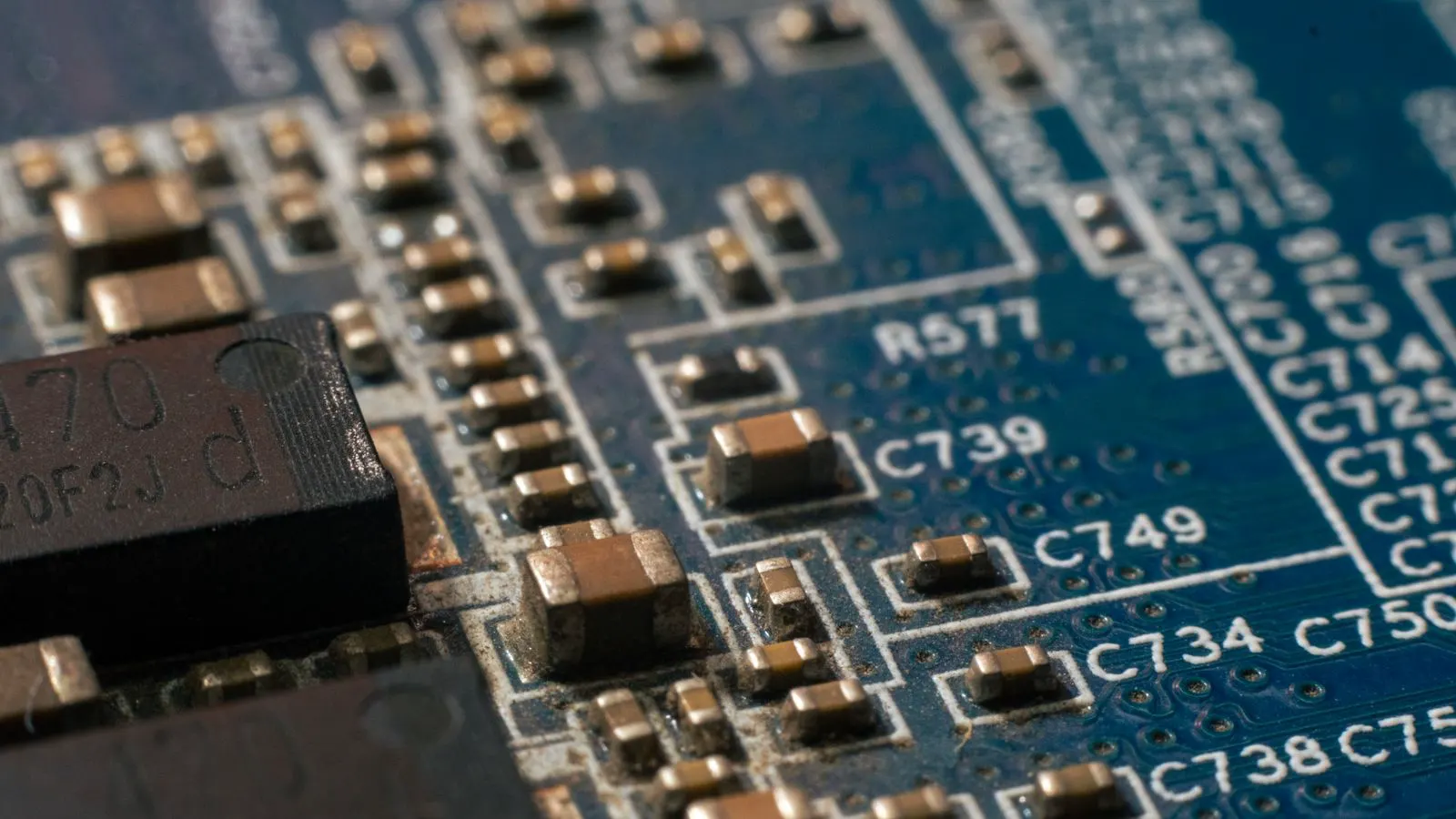
This guide explains how to evaluate and select reliable suppliers for passive electronic components. It covers key criteria like quality control, traceability, and technical support to help buyers reduce risk and ensure consistent supply for resistors, capacitors, and inductors.
- Define qualification criteria before contacting suppliers to avoid subjective evaluation.
- Prioritize suppliers with documented quality management systems and lot traceability.
- Test multiple suppliers on a small batch before committing to long-term agreements.
- Use technical support responsiveness as a practical indicator of future reliability.
- Maintain a dual-source strategy for critical passive components to mitigate supply risk.
Why Passive Component Sourcing Demands Different Evaluation
Passive components appear simple on a bill of materials, yet they drive performance in power supplies, RF systems, and control loops. A single out-of-spec resistor can drift temperature, causing a control loop to oscillate. A capacitor with high equivalent series resistance may fail under thermal load.
Unlike discrete semiconductors, passive parts often come from multiple vendors with similar datasheets. This makes supplier selection a technical and operational exercise, not just a price comparison.
Buyers need a structured approach to sourcing passive components. The right method separates reliable suppliers from risky ones before a production line stalls.
What Quality Indicators Should You Check?
Quality in passive components is not just about passing a one-off test. It is about consistency across lots, stability over time, and clear documentation.
Start by requesting the supplier’s quality management certificate. Look for documented processes for incoming material inspection, in-process checks, and final test. A supplier that tracks lot numbers from raw material to shipment provides a clear trail if a failure occurs.
For resistors, ask about tolerance bands and temperature coefficients. A 5 percent tolerance resistor is acceptable for some sensors, but a 0.1 percent metal film or wire wound type may be required for precision circuits. The supplier should be able to explain the material used and the manufacturing method.
For capacitors, check the dielectric type. Ceramic capacitors are compact and fast but can show microphonics and voltage derating effects. Film capacitors offer better stability but occupy more space. Electrolytic capacitors provide high capacitance but have a limited shelf life. The supplier should match the dielectric to the application, not just the capacitance value.
Reliability data matters. Request failure rate information if available, even if it is general. For high reliability applications, ask about derating practices and stress test protocols.
How to Evaluate Resistor Sourcing Options
Resistors are the most common passive part, but sourcing them requires attention to packaging, tolerance, and temperature performance.
SMD resistors come in various case sizes, from 0402 to 2010. Each size has a power rating and a specific tolerance range. The supplier should provide datasheets that clearly state the power rating at a specific ambient temperature and the maximum operating temperature.
For through hole resistors, axial and radial types serve different board layouts. Axial resistors are cheaper and easier to place. Radial resistors are common in power applications. The supplier should offer both and explain the mechanical differences.
Tolerance is a key differentiator. Standard resistors often fall in 1, 5, and 10 percent bands. Precision resistors use 0.5, 0.1, or even 0.01 percent tolerances. The supplier should explain the manufacturing process, such as wire wound or thick film, and how it affects temperature coefficient and noise.
Temperature coefficient directly impacts long term drift. A 100 ppm per degree C resistor is better for stable circuits than a 500 ppm part. The supplier should provide the temperature coefficient range, not just the average.
Packaging also affects reliability. SMD resistors with thick film construction may crack under mechanical stress. Wire wound resistors handle higher power but are bulkier. The supplier should advise on the best construction for the mounting method and power level.
How to Choose a Capacitor Supplier
Capacitor supplier selection involves more than matching capacitance and voltage. Dielectric material, tolerance, and ESR are the main differentiators.
Ceramic capacitors are the workhorse of modern electronics. They come in X7R, X5R, and C0G types. C0G offers the best stability but lower capacitance per size. X7R and X5R allow higher capacitance but have voltage dependent capacitance. The supplier should explain how the dielectric affects the circuit function.
Film capacitors are preferred in power factor correction and audio applications. Polypropylene and polyester films have different loss characteristics. The supplier should specify the dielectric constant and loss tangent.
Electrolytic capacitors, both aluminum and tantalum, are used for bulk energy storage. They have a polarity and a limited shelf life. The supplier should provide the rated lifetime at a specific temperature and ripple current rating.
ESR is a critical parameter for high frequency applications. A low ESR capacitor can reduce heat and improve transient response. The supplier should provide ESR values at a specific test frequency.
Tolerance for capacitors varies by type. Ceramic capacitors often have 10 or 20 percent tolerances. Film capacitors can be tighter. The supplier should clarify the tolerance and whether it is measured at a specific frequency.
Key Criteria for Supplier Comparison
Use a structured table to compare suppliers. This prevents bias and ensures every vendor is judged on the same factors.
| Criterion | What to look for | Why it matters |
|---|---|---|
| Quality Documentation | ISO certification, lot traceability, test reports | Provides a clear path for root cause analysis and reduces compliance risk |
| Technical Support | Responsiveness, application notes, design review help | Ensures the supplier can solve real circuit issues, not just ship parts |
| Reliability Data | Failure rates, derating info, stress test results | Indicates long term performance and helps set design margins |
| Packaging Options | SMD, through hole, reel, tray, tape and reel | Matches your assembly line and reduces handling errors |
| Lead Time Stability | Average lead time, buffer stock, allocation policies | Prevents production delays during supply chain disruptions |
| Pricing Transparency | Clear cost breakdown, no hidden fees, long term price locks | Makes budgeting easier and reduces surprise cost increases |
How to Qualify a Supplier Before Committing
Qualification is a phased process. Do not qualify a supplier by placing a large order. Start small.
First, review the supplier’s quality documentation. Request their ISO certificate and a sample lot traceability record. Check if the lot numbers match the shipment packaging.
Next, order a small sample of the critical parts. Run them through your standard incoming inspection. Measure tolerance, ESR, or power dissipation. Compare the results against the datasheet.
Then, evaluate the technical support. Ask a specific technical question, such as how to derate a capacitor for high ripple current. Gauge the response time and the depth of the answer. A good supplier will provide a clear formula or reference, not a vague suggestion.
Finally, assess logistics. Check the packaging for damage, verify the part number on the label, and confirm the quantity. A reliable supplier will package parts to prevent ESD damage and physical breakage.
How to Manage Risk with Multiple Suppliers
Sourcing passive components from a single source creates supply risk. Component shortages, quality failures, or financial issues can stop production.
Maintain at least two qualified suppliers for critical passive parts. The secondary supplier should be qualified to the same standard as the primary. This takes time, but it protects the production line.
Use a dual source strategy for high volume items. For example, source resistors from one supplier and capacitors from another. This reduces the risk of a single failure point.
Monitor supplier performance continuously. Track on time delivery, defect rate, and responsiveness. Use a scorecard to review performance quarterly.
Keep a buffer stock for critical passive components. Even with a reliable supplier, supply chain disruptions happen. A small buffer can cover delays during peak seasons or global events.
Decision Checklist
Before signing a supplier agreement, run through this checklist.
- Does the supplier have a documented quality management system?
- Can you trace a specific lot back to the raw material?
- Have you tested a small batch of the critical parts?
- Did the technical support team answer a specific application question?
- Is the lead time stable and documented?
- Are there no hidden fees in the pricing structure?
- Do you have a secondary supplier qualified for the same parts?
- Is the packaging suitable for your assembly line?
- Do you have a failure rate or reliability data sheet?
- Is the price transparent and locked for a defined period?
If any of these answers is no, do not commit to a long term agreement. Resolve the issue first.
Sourcing passive components reliably is a process. It requires technical knowledge, operational discipline, and continuous monitoring. By using the criteria above, you can select suppliers that reduce risk and support long term production goals.
Frequently asked questions
How do I verify a supplier's quality claims?
Request their ISO certificate and a sample lot traceability record. Check if the lot numbers match the shipment packaging and ask for test reports.
What is the difference between X7R and C0G ceramic capacitors?
C0G offers better voltage stability and lower loss but lower capacitance per size. X7R allows higher capacitance but has voltage dependent capacitance.
How many suppliers should I qualify for critical passive parts?
Qualify at least two suppliers for critical passive parts to mitigate supply risk. The secondary supplier should be qualified to the same standard.
What is the best way to test a new supplier before a large order?
Order a small sample, run it through incoming inspection, and evaluate technical support by asking a specific application question.
Do I need to requalify a supplier after a price change?
Not necessarily, but review the quality documentation and retest if the price change is significant. A large price drop may indicate a change in material or process.