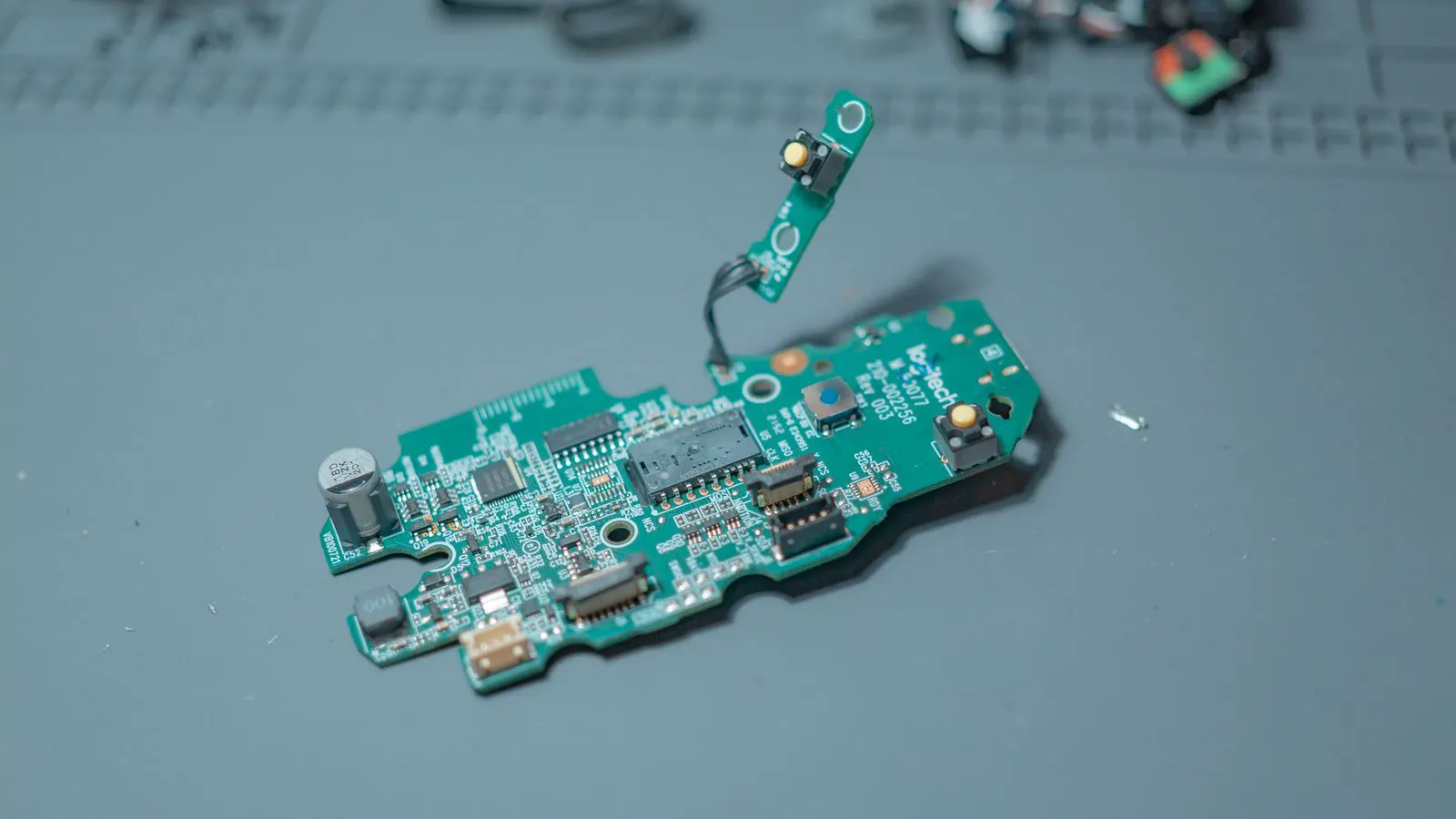
Sourcing SMD components for mass production requires strict qualification, multi-source strategy, and automated inventory controls. This guide provides a framework for evaluating distributors, validating part numbers, and managing supply risk to ensure uninterrupted high-volume electronics output.
- Qualify suppliers through audit and sample testing before releasing production orders.
- Implement a dual-source strategy for critical surface mount parts to mitigate single-point failures.
- Use automated reorder points tied to production schedules to prevent line stoppages.
- Track lead time variability by part family, not just by individual distributor.
- Maintain a documented BOM revision history to prevent obsolete part substitution.
Why SMD Sourcing Differs From Through-Hole Procurement
Surface mount devices compress the entire component footprint into a single package. A 0603 resistor or a BGA memory chip occupies minimal board real estate, which reduces assembly cost but raises complexity in the supply chain. Unlike through-hole parts, SMD components often require tighter tolerances, specialized handling, and stricter moisture sensitivity controls.
When a procurement manager sources for a high-volume line, the failure mode is rarely a single bad shipment. It is usually a cascade. A distributor substitutes a revision. A lead time slips by two weeks. A reel arrives with damaged leads. Each of these issues creates scrap, rework, or a production stop that costs more than the components themselves.
Effective SMD component sourcing treats the supply chain as an engineering variable. It requires the same rigor applied to the PCB layout and the solder paste. The goal is predictable availability. The difference between a smooth line and a halted line often comes down to how well the procurement team manages these variables. Through-hole parts are physically robust and easier to handle. They can be dropped without immediate damage and often tolerate storage conditions that would degrade SMD devices. SMD parts, however, are sensitive to static discharge, moisture, and physical shock during pick-and-place operations. This sensitivity demands a different approach to supplier selection and quality control.
The supply chain for SMD parts is longer and more opaque. A component may travel from the manufacturer to a primary distributor, then to a secondary distributor, and finally to the assembly plant. Each hand-off increases the risk of damage, contamination, or substitution. The procurement team must manage this complexity to ensure that the part arriving at the soldering station is exactly what was designed for the board.
How to Qualify a Surface Mount Component Supplier
Do not rely on a vendor portal or a marketing brochure. Qualification must happen before the first production order. The checklist below applies to both direct manufacturers and authorized distributors.
- Audit the facility. Verify the warehouse conditions, specifically humidity and temperature controls. SMD components are hygroscopic. If the supplier cannot prove their storage conditions, reject them. Check for desiccant presence in the packaging. Look for temperature and humidity loggers in the storage area. The environment must be controlled to prevent moisture absorption, which can cause solder joint cracking during reflow.
- Review the distribution chain. Ask if the part is direct from the manufacturer or from a secondary source. Secondary sources increase the risk of counterfeit or obsolete stock. Request documentation that traces the part back to the original manufacturer. Ask for the authorization letter from the manufacturer. This document proves the distributor has the right to sell the specific brand and model.
- Test a sample lot. Pull a small quantity of the specific part number. Run it through your incoming quality inspection. Check for physical defects, correct markings, and solderability. Measure the dimensions of a sample using a caliper or micrometer. Compare the readings to the datasheet. Test the solderability of a few parts by applying a small amount of solder paste and heating them. Look for good wetting and no bridging.
- Evaluate the data sheet accuracy. Compare the part number, package size, and electrical specs on the invoice against the datasheet. Discrepancies here often signal a wrong revision or a counterfeit part. Check the date code on the packaging. Ensure it matches the expected production window. Look for any discrepancies in the package dimensions or the lead finish.
If a supplier cannot provide a traceable lot number, a date code, and a certificate of conformance, they are not ready for your production line. The certificate of conformance should match the specific part number and lot number. It should also state that the part meets the manufacturer’s specifications. This document serves as a legal record of the quality of the goods received.
Criteria for Evaluating Distribution Channels
Choosing between a global distributor, a local supplier, and a direct manufacturer is a trade-off between cost, speed, and control. Each channel has different strengths and weaknesses for high-volume electronics.
| Criterion | What to look for | Why it matters |
|---|---|---|
| Stock Availability | Real-time inventory data and backorder status | Prevents production delays when a part is not on the shelf. |
| Lead Time Consistency | Historical performance data, not just quoted times | Predictable delivery protects the production schedule. |
| Technical Support | Access to application engineers and reference designs | Helps resolve design or assembly issues quickly. |
| Quality Assurance | Certificate of conformance and audit reports | Verifies the part meets specification and reduces defect risk. |
| Order Flexibility | Minimum order quantities and partial shipment options | Allows you to adjust to demand fluctuations without excess inventory. |
A global distributor may offer a lower unit cost but a longer lead time. A local supplier may be faster but charge more. The right choice depends on your production volume and the criticality of the part. For high-volume electronics, you often need a mix of both.
Consider the logistics of receiving the parts. A global distributor may ship in pallets of hundreds of reels. This is cost-effective for large volumes but requires significant warehouse space. A local supplier may ship in smaller quantities, allowing for just-in-time delivery. This reduces storage costs but increases the frequency of receiving and inspection.
Evaluate the technical support provided by each channel. For complex parts like memory chips or power management ICs, access to application engineers is valuable. They can help troubleshoot design issues, such as thermal management or signal integrity problems. A distributor that provides this level of support can save time and money during the design phase.
Look at the quality assurance processes. Ask the supplier for their audit reports. If they do not have them, ask what steps they take to verify the quality of the parts they sell. Reputable suppliers have strict quality control processes and can provide detailed reports. This transparency helps you assess the risk of receiving defective parts.
Managing Part Substitution and Obsolescence
One of the biggest risks in SMD procurement is the silent substitution. A distributor may replace a discontinued part with a look-alike. The new part might look identical but have different thermal characteristics or solder mask thickness.
To prevent this, lock your BOM. Specify the exact part number, manufacturer, and package in your purchase order. Do not allow the supplier to substitute without your written approval. Include a clause in the purchase order that states no substitutions are allowed without prior written consent. This protects you from receiving a part that does not meet your design requirements.
Also, monitor for end-of-life notices. Suppliers often give 30 to 90 days notice before a part is discontinued. If you have not bought enough stock to cover your next production run, you have a problem. Keep a buffer stock of critical parts. This buffer should be based on your average lead time plus a safety margin.
Create a process for tracking end-of-life notices. Assign a team member to monitor supplier websites and newsletters for these updates. When a notice is received, calculate how much stock you have on hand and how much you need for the upcoming production runs. If you are short, place an immediate order to replenish the buffer. If you are short by a large margin, consider design changes or finding an alternative part.
Design changes are a last resort. They require rework, requalification, and potentially new tooling. They are expensive and time-consuming. Therefore, it is better to manage the transition to a new part early. Start qualifying the alternative part as soon as the end-of-life notice is received.
Building a Dual-Source Strategy
Sourcing from a single supplier for a critical component is a single point of failure. If that supplier has a quality issue, a logistics delay, or a financial problem, your line stops.
A dual-source strategy means qualifying two suppliers for every critical part. One becomes the primary source, and the other is the backup. The backup source does not need to be used all the time, but it must be qualified and ready.
This approach adds complexity. You must manage two sets of data sheets, two sets of incoming inspection criteria, and two sets of purchase orders. But it reduces risk. If the primary source fails, you can switch to the backup with minimal disruption.
For high-volume electronics, the cost of a production stop is far higher than the cost of managing two suppliers.
To implement a dual-source strategy, start with the most critical parts. Identify the parts that are most likely to cause a production stop if they are unavailable. These are usually the parts with long lead times, high costs, or unique specifications. Qualify a second source for these parts first.
Once the second source is qualified, develop a plan for switching to it. This plan should include the steps to update the BOM, the purchase orders, and the production schedule. It should also include the inspection criteria for the new source. By having this plan in place, you can make a quick decision if the primary source fails.
Controlling Inventory and Lead Time
Inventory control is not about having more stock. It is about having the right stock at the right time. Too little inventory causes stockouts. Too much inventory ties up cash and takes up space.
Use a reorder point system. Set a minimum stock level for each part. When the stock level hits that point, the system automatically generates a purchase order. The reorder point should be based on your average daily consumption and the supplier’s lead time.
For example, if you use 100 resistors per day and the supplier takes 14 days to deliver, your reorder point should be at least 1400 units. Add a safety margin for variability. If the lead time can be as long as 21 days, increase the reorder point to 2100 units.
Review these parameters regularly. Lead times change. Demand changes. If you do not update your reorder points, your inventory system will not reflect reality.
Create a dashboard to track inventory levels and lead times. This dashboard should show the current stock level, the reorder point, and the expected delivery date for each part. It should also show the historical lead time for the supplier. This information helps you make informed decisions about when to place orders and how much to order.
Consider the cost of holding inventory. High-value parts like microprocessors or memory chips have a high holding cost. For these parts, it is better to have a lower reorder point and a shorter lead time. This requires a reliable supplier with a consistent delivery performance.
Low-value parts like resistors and capacitors have a low holding cost. For these parts, it is better to have a higher reorder point and a longer lead time. This reduces the number of orders and the administrative burden.
Final Decision Checklist
Before placing a production order for SMD components, run through this checklist.
- Is the supplier qualified and audited?
- Is the part number locked in the purchase order?
- Is the sample lot tested and approved?
- Is the stock level above the reorder point?
- Is a backup source qualified and available?
- Is the lead time consistent with the production schedule?
- Is the inventory value within budget?
If any of these answers is no, do not release the order. Fix the issue first.
Sourcing SMD components for a high-volume line is a continuous process. It requires constant attention to supplier performance, inventory levels, and part availability. By following this framework, you can reduce risk and keep your production line running. The goal is not to find the cheapest part. The goal is to find the right part, reliably, every time.
Track the performance of each supplier over time. Keep a record of on-time delivery, defect rates, and technical support responsiveness. This data helps you make informed decisions about which suppliers to continue using and which to replace.
Regularly review the BOM for parts that are approaching end-of-life. This review should be done at least quarterly. It helps you identify potential issues early and take action before they become critical.
Maintain open communication with your suppliers. Share your production plans and demand forecasts with them. This helps them manage their inventory and allocate resources to your orders. It also helps you understand their capacity and potential bottlenecks.
By implementing these practices, you can create a robust supply chain for SMD components. This supply chain will be able to handle the complexities of high-volume production and provide the reliability needed to meet your customer demands.
Frequently asked questions
How often should I review my supplier performance?
Review performance at least quarterly. Track lead time accuracy, defect rates, and communication responsiveness.
What is the best way to handle a supplier delay?
Activate your backup source immediately. Notify your production team and adjust the schedule to reflect the new lead time.
Can I buy SMD parts from multiple distributors at once?
Yes, for critical parts, use a dual-source strategy. For less critical parts, a single source may be sufficient.
How do I detect counterfeit SMD components?
Check the physical markings, verify the lot number, and test a sample lot. Look for discrepancies in packaging or data sheets.
What is the difference between a direct manufacturer and a distributor?
A manufacturer produces the part. A distributor buys and sells the part. Distributors offer convenience and stock, while manufacturers offer direct support.