Distributors offer traceability but higher costs, while brokers provide flexibility at the expense of documentation. This guide breaks down the risk profile of each channel so procurement teams can select the safer path for their supply chain.
- Authorized distributors maintain full traceability but operate at higher cost points.
- Brokers can source quickly but often lack the documentation needed for deep forensics.
- The risk of component sourcing depends on the specific part, market volatility, and your verification controls.
- Hybrid models allow you to balance security with availability across different distribution channels.
- Document gaps in any channel should trigger immediate verification steps before parts enter production.
Why channel choice matters more than price
Procurement teams often treat the supplier channel as a background variable. Price and lead time get the attention. The channel itself, however, determines how much you can verify once a part arrives. A counterfeit microcontroller from a broker may pass a basic visual check. The same part from an authorized distributor comes with a lot number, a specific date code, and a chain of custody that you can audit.
The distinction is not moral. Brokers are not inherently bad. Distributors are not inherently safe. The difference lies in the depth of information available at the point of purchase. When you buy from a channel that cannot prove where a part came from, you are accepting a risk that no amount of incoming inspection can fully remove.
How authorized distributors manage risk
Authorized distributors buy directly from manufacturers or through a tightly controlled network. Their inventory moves through a documented pipeline. When you order a specific IC, the distributor can tell you the lot number, the manufacturing date, and the original shipment path. This documentation is the backbone of traceability.
This model works well for high-value or safety-critical components. A processor in an automotive control unit, for example, requires a paper trail that survives years of service. The distributor provides that trail. They also handle returns, RMA processes, and technical support.
The limitation is cost and availability. Authorized distributors set prices based on the manufacturer. They do not compete aggressively on price to win business. If a part is in short supply, the distributor may have a long lead time because they are not buying on the open market. They follow the manufacturer’s allocation.
The broker model and its trade-offs
Brokers buy parts from various sources and sell to your company. They operate in a spot market. Their advantage is speed and availability. They can often find a part that a distributor cannot, especially for obsolete or hard-to-find items.
The risk profile is different here. A broker may source a part from a distributor, a secondary market, or a gray market channel. The documentation they provide may be a generic invoice, not a full traceability report. If the part is counterfeit, the broker may not be able to trace it back to the source. Their incentive is to sell the part, not to verify its authenticity.
Brokers are common in the market for obsolete parts. When a manufacturer stops production, the supply chain shifts. Brokers become the primary source. This is where the risk of component sourcing spikes. The part may be genuine but obsolete. It may also be counterfeit. The difference is often visible only under advanced testing.
Comparison of distribution channels
The table below compares three common channels. Each has a different risk profile and a different use case.
| Option | Best for | Limitations |
|---|---|---|
| Authorized Distributor | High-value parts, safety-critical systems, full traceability | Higher cost, limited availability for obsolete parts |
| Independent Broker | Obsolete parts, short-term shortages, spot market | Limited documentation, variable authenticity |
| Manufacturer Direct | Long-term supply agreements, custom parts | High minimum order quantities, long lead times |
Authorized distributors are the safest for new production runs. They provide the documentation your quality team needs. Brokers are useful for filling gaps. They are not ideal as your primary channel for critical parts. Manufacturer direct is best when you can commit to volume. It is not practical for small prototypes or one-off projects.
When to use a hybrid approach
Most supply chains do not rely on a single channel. A typical setup uses authorized distributors for core components and brokers for secondary parts. This hybrid model balances security with availability.
The key is to know which channel you are using for which part. If a part is on your criticality list, you source it from an authorized distributor. If it is a non-critical connector or a passive component, a broker may be acceptable. You must define these thresholds. Without them, every part enters the supply chain with the same risk profile, and your quality team cannot prioritize its verification efforts.
The hybrid approach also requires a clear process for moving parts between channels. If a distributor cannot supply a part within your lead time, you may need to switch to a broker. That switch must be documented. The part number, the reason for the switch, and the broker’s documentation should all be recorded. This creates an audit trail that protects you if a counterfeit part is later discovered.
Red flags that indicate higher risk
Certain signs suggest a channel or transaction carries elevated risk. These red flags should trigger a deeper review before you approve the purchase.
- The supplier cannot provide a lot number or date code.
- The price is significantly below the distributor price.
- The supplier resists providing a certificate of authenticity.
- The part is from a manufacturer with a history of counterfeit issues.
- The supplier is located in a region with high counterfeit activity.
These red flags do not automatically mean the part is counterfeit. They mean you need to verify it. The verification process may include visual inspection, electrical testing, or X-ray analysis. The cost of verification must be weighed against the cost of failure. A failed part in a medical device is not the same as a failed part in a consumer toy.
How to verify parts from any channel
Verification is the control that reduces the risk of component sourcing. It does not eliminate it, but it gives you a level of confidence that the part is genuine.
The process starts with documentation. You need the supplier’s invoice, the part number, the lot number, and the date code. If any of these are missing, you have a gap. That gap increases your risk.
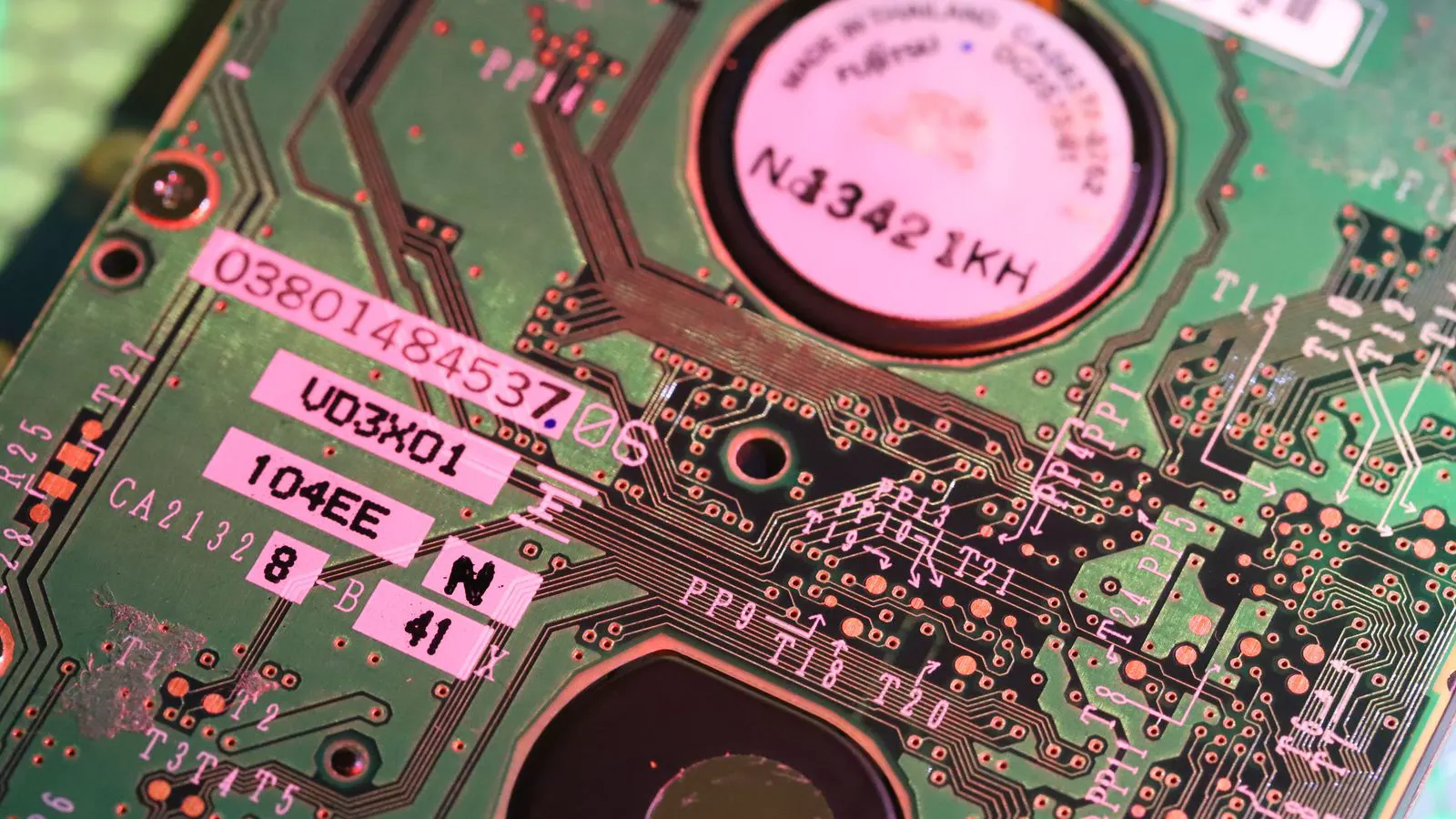
Next is visual inspection. You check the packaging, the labels, and the part itself. Look for signs of tampering, such as missing date codes, mismatched lot numbers, or poor quality printing. A simple magnifying glass can reveal a lot of.
Then is electrical testing. You measure the electrical characteristics of the part. For ICs, this may include current draw, voltage response, and timing parameters. A counterfeit part may not match the datasheet specifications.
For high-value parts, you may need advanced testing. X-ray analysis can reveal internal defects or altered die. Spectroscopy can check the material composition. These tests are expensive but provide a high level of confidence.
The verification process should be scaled to the risk. A cheap resistor does not need an X-ray. A high-value processor does. You need a risk-based approach to verification.
How to reduce risk across your supply chain
Reducing risk is not a one-time task. It is an ongoing process. You need to monitor your suppliers, your parts, and your market.
Start with your supplier base. Know who your suppliers are. Know their risk profile. If you use a broker, know their sourcing channels. If they buy from a distributor, that is lower risk. If they buy from the open market, that is higher risk.
Next, monitor your parts. Some parts are more likely to be counterfeit than others. High-value, high-demand parts are targets. You should identify these parts and apply stricter verification controls.
Finally, monitor the market. The counterfeit market changes. New suppliers appear. New counterfeit techniques emerge. You need to stay informed. Industry associations and security groups share intelligence on counterfeit trends. Use that intelligence to update your risk assessments.
The goal is not to eliminate all risk. That is impossible. The goal is to manage risk so that it stays within your acceptable limits. Every part that enters your supply chain should have a known risk profile. Every part with a high risk profile should have a verification process.
Final considerations for procurement teams
The choice between a distributor and a broker is not a simple binary. It is a decision based on the part, the application, and your risk tolerance. Authorized distributors provide traceability at a higher cost. Brokers provide availability at a higher risk. Manufacturer direct provides control at a higher minimum order quantity.
Your procurement team should define which parts go through which channel. They should document the risk for each part. They should verify high-risk parts. They should monitor their suppliers and the market.
The result is a supply chain that is not just cheaper, but safer. The cost of a counterfeit part is never just the price of the part. It is the cost of downtime, recalls, and reputational damage. Managing component sourcing risk is not an expense. It is a protection.
Frequently asked questions
Can a broker provide genuine parts?
Yes, brokers can provide genuine parts. They often source from authorized distributors or other legitimate channels. The risk is that they may not always be able to provide full documentation.
Is it ever worth buying from an unverified source to save time?
It depends on the part. If the part is non-critical and the cost of failure is low, you may accept the risk. If the part is safety-critical, you should not use an unverified source.
How do I know if a distributor is authorized?
Check the manufacturer's website for a list of authorized distributors. You can also ask the distributor for their authorization certificate.
What is the best way to verify a part after receiving it?
Start with documentation. Check the lot number and date code. Then perform a visual inspection. For high-value parts, use electrical testing or X-ray analysis.
How often should I review my supplier risk profile?
At least annually. Or whenever there is a change in the market, a new supplier, or a quality issue.